Effective spider control northern Utah requires identifying common local species like hobo spiders and black widows while utilizing professional extermination services for comprehensive removal. Property owners can manage infestations by sealing cracks, clearing debris, and scheduling regular seasonal treatments to ensure long term protection.
Finding spiders tucked into basement corners or stretched across window frames is a common frustration for northern Utah homeowners, particularly as temperatures begin to shift. While these pests are often more of a nuisance than a true danger, the anxiety of an unexpected encounter can quickly compromise your peace of mind. Understanding which species are native to our unique climate is essential for effective management; misidentifying a harmless house spider for something more concerning often leads to unnecessary stress. In this guide, we will identify the most frequent local arachnids, debunk the persistent myths surrounding the Brown Recluse in Utah, and clarify the actual risks associated with Hobo spiders. You will also learn the optimal timing for seasonal preventative sprays and discover professional strategies to keep your property secure. By the end, you will have a clear roadmap for reclaiming your space from unwanted intruders.
The Reality of Spiders in Northern Utah
Northern Utah is home to a surprising variety of arachnids. From the orchards of Box Elder County through the residential corridors of Weber and Davis, residents share their environment with over 600 species of spiders. While the vast majority of these creatures are harmless predators that provide natural pest control outdoors, our high-desert climate creates unique challenges for homeowners. Utah’s intense seasonal shifts, characterized by scorching summers and freezing winters, frequently drive these eight-legged visitors inside in search of stable temperatures and moisture.
At Anders Pest Control, we understand the specific ecological pressures of the Wasatch Front. Effective spider control northern Utah requires more than just reactive spraying; it necessitates a deep understanding of how these species respond to our dry environment. We provide reliable residential and commercial pest management by recognizing that spiders are not just random invaders, but biological actors responding to local conditions. Our approach is customized to each client’s needs, ensuring that we address the root causes of infestations while protecting the structural integrity of your property throughout the year.
Identifying Common Northern Utah Spiders
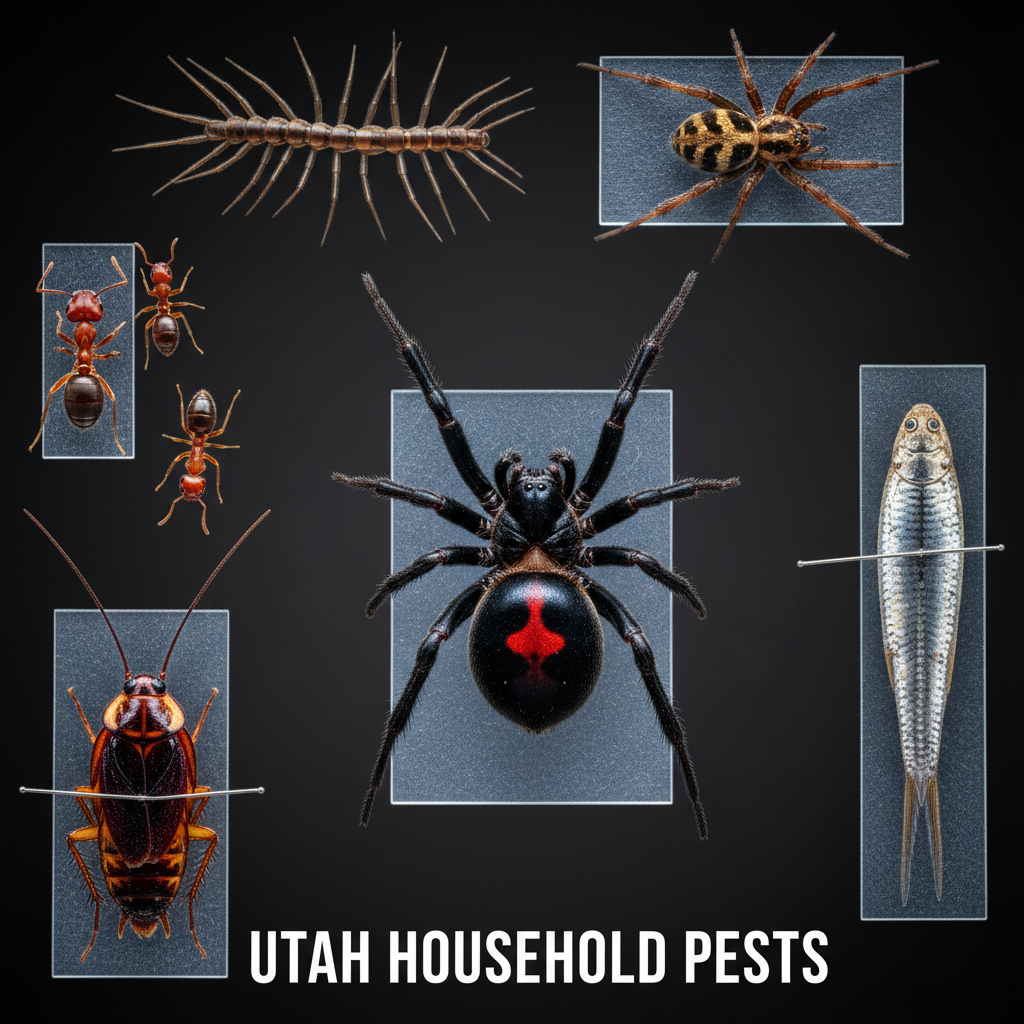
Identifying the specific arachnids in your home is the first step toward effective management. While hundreds of species inhabit the Wasatch Front, four specific types account for the vast majority of homeowner inquiries. Understanding their biology and preferred habitats allows us to implement customized to each client’s needs when developing a treatment plan.
Western Black Widow: This is the most medically significant spider in our region. Females are easily identified by their jet-black, bulbous bodies and the bright red hourglass marking on their underside. They are reclusive by nature, favoring dark and undisturbed locations. In Box Elder and Weber counties, we frequently find them in window wells, cluttered garages, and woodpiles. Because they stay tucked away, you are more likely to encounter their messy, asymmetrical webs before you see the spider itself.
Hobo Spider: A member of the funnel-web weaver family, the Hobo spider is often misunderstood. They are medium-sized, brown, and possess hairy legs. They build thick, mat-like webs that terminate in a funnel-shaped retreat. These spiders are frequently found in basements or near foundation cracks where moisture levels are slightly higher.
Wolf Spider: These are the active hunters of the Utah landscape. Wolf spiders are large, robust, and do not spin webs to catch prey. Instead, they rely on their camouflage and impressive speed to hunt insects on foot. It is common to see them scurrying across floorboards or near entryways during the evening hours.
Yellow Sac Spider: These are notorious fall invaders. Small and pale yellow or light green, they do not build traditional webs. Instead, they construct small, silk-like tubes or "sacs" in the corners where walls meet ceilings. They are more active at night and are responsible for many of the indoor sightings as the weather cools.
For a professional-level identification, we look at the eye arrangement. Wolf spiders have three rows of eyes, featuring two very large, prominent eyes in the center row that assist with their hunting. Conversely, Hobo spiders have eight eyes of roughly equal size arranged in two horizontal rows. Accurate identification is critical for successful spider control northern Utah, as it determines whether we focus our efforts on ground-level barriers or elevated interior treatments.
Debunking the Brown Recluse Myth in Utah
One of the most persistent misconceptions we encounter while providing spider control northern Utah is the fear of the Brown Recluse. While this species is infamous for its necrotic venom, scientific research from Utah State University confirms that the Brown Recluse (Loxosceles reclusa) does not inhabit Northern Utah. This spider is native to the Midwest and South; it simply does not have established populations in our high-desert climate.
Confusion often arises because of the Desert Recluse (Loxosceles deserta). While this relative does live in Utah, its range is strictly limited to the extreme southwestern corner of the state, primarily around St. George. In Box Elder, Weber, and Davis counties, the spiders people mistake for recluses are almost always Hobo spiders or Wolf spiders. These species share similar brown coloring, but they lack the distinct violin shape on the cephalothorax that characterizes a true recluse.
Misidentification can lead to unnecessary anxiety. At Anders Pest Control, we believe that accurate information is the foundation of reliable residential and commercial pest management. By correctly identifying the species in your home, we can apply customized to each client’s needs treatments that target the actual residents of your property, rather than phantom threats that do not exist in our region.
Are Hobo Spiders Dangerous? Clearing Up the Confusion
The hobo spider has historically carried a reputation nearly as fearsome as the recluse. For decades, it was blamed for necrotic skin lesions across the Intermountain West; however, modern scientific evidence has significantly shifted this perspective. Current research, supported by data from the CDC and local entomologists, suggests that hobo spider venom is not actually necrotic to humans. While they can bite you if they are pressed against your skin or trapped in bedding, they are not aggressive hunters seeking human contact.
When a hobo spider does bite, it may deliver either a "dry bite" or a "wet bite." A dry bite occurs when the spider nips defensively without injecting venom; this usually results in minor, short lived irritation. A wet bite involves envenomation, which can cause localized pain, redness, and swelling similar to a vigorous bee sting. Although these bites are uncomfortable, they are rarely dangerous to healthy adults without specific allergies. This realistic risk assessment helps homeowners prioritize their concerns without unnecessary panic.
Despite the reduced medical concern, having these spiders in your basement or crawlspace remains a significant nuisance. At Anders Pest Control, we provide reliable residential and commercial pest management that addresses these funnel-web builders specifically. By focusing on the damp cracks and floor-level crevices where they prefer to hide, we ensure your home remains a comfortable environment. For residents seeking effective spider control northern Utah, understanding the actual risk of the hobo spider allows for a balanced approach to customized to each client’s needs treatment plans.
Why Spiders Are Entering Your Home
Spiders do not enter Northern Utah homes to harass humans; they are driven by biological necessities. The primary motivator is the high-desert climate. With temperatures in Box Elder and Weber counties swinging from triple digits in the summer to well below freezing in the winter, spiders seek the stable environment of your crawlspace or attic. Our reliable residential and commercial pest management frequently identifies these climate-driven migrations during the transition months.
Food availability is the second major factor. Spiders are opportunistic predators that follow their prey. If your home has a minor influx of ants, flies, or gnats, it effectively becomes a baited trap for arachnids. Effective spider control northern Utah often begins by addressing these secondary pest populations to remove the spiders' food source.
During the late summer and fall, you will likely notice a surge in activity due to mating season. Male spiders wander far from their usual hiding spots in search of females, often entering homes through gaps in siding or under ill-fitting door sweeps. While some homeowners ask "What color walls do spiders hate?" in hopes of a simple fix, the reality is less about aesthetics. Some studies suggest spiders may show a slight preference for certain light wavelengths, such as green or blue, over darker shades that mimic shadows. However, a spider seeking a mate or warmth will not be deterred by paint color. Physical barriers and customized to each client’s needs treatment plans are far more effective at preventing entry than changing your interior decor.
The Best Time for Spider Spray in Utah
Timing is essential for effective spider management in our high-desert climate. A reactive approach often results in homeowners chasing pests that have already established themselves indoors. Instead, we recommend a seasonal roadmap for reliable residential and commercial pest management that aligns with the biological cycles of local arachnids.
Early Spring (March/April): As temperatures rise and the Box Elder County orchards begin to bloom, overwintering eggs hatch and young spiderlings emerge. Treating your property during this window targets the first generation of the year, significantly reducing the population before they have a chance to mature and reproduce.
Mid-Summer (June/July): During the heat of the summer, spider activity reaches its peak. Arachnids are often driven toward the cooler, shaded areas around your foundation and eaves. A summer treatment reinforces the exterior barrier and manages the increased prey population that attracts spiders to your home.
Fall (September/October): This is the most critical time for spider control northern Utah. Before the first frost hits the Wasatch Front, many species seek warmth and mates, leading them directly into your living spaces. Establishing a fresh perimeter shield in the fall prevents this migration.
Our seasonal protocols are customized to each client’s needs to ensure your home remains protected year-round. If you notice an uptick in activity during these transition periods, contact Anders Pest Control to schedule a targeted treatment.
Effective Prevention: How to Keep Spiders Out
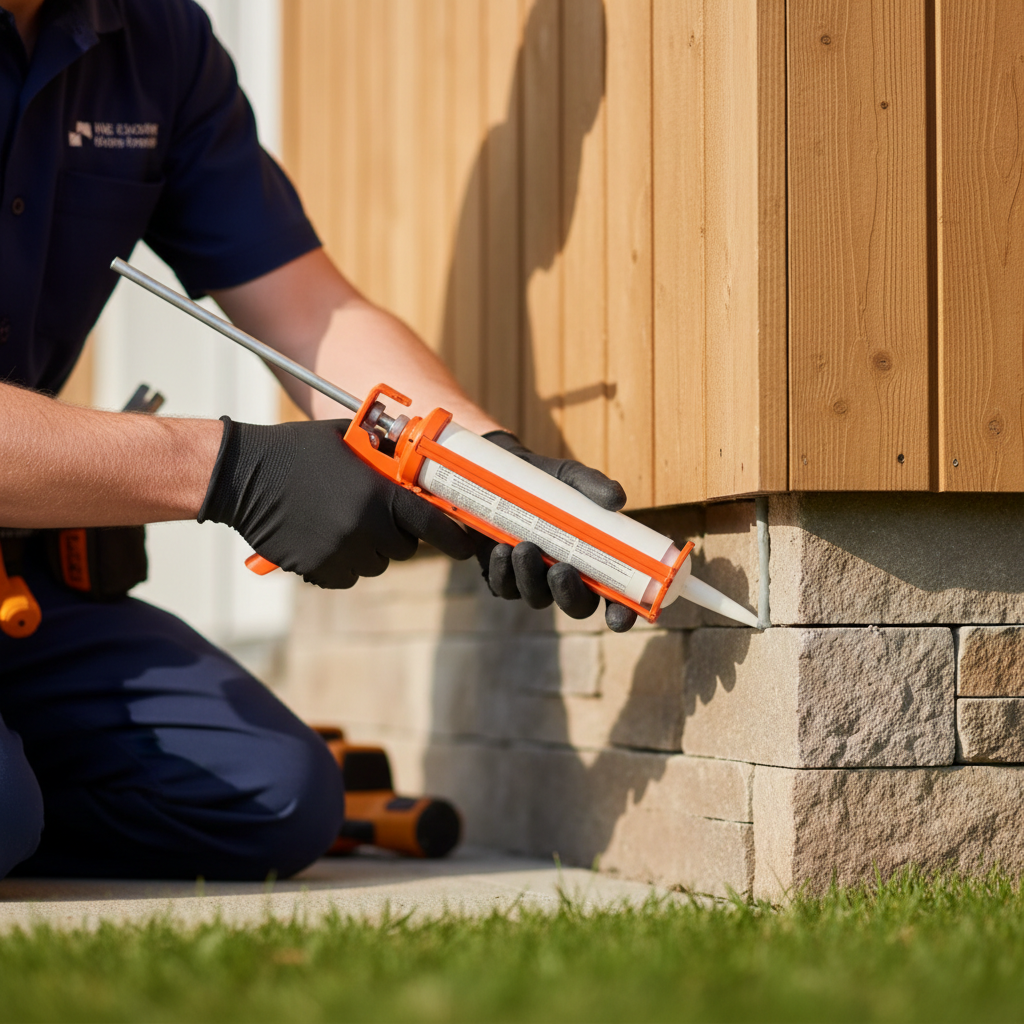
Maintaining a spider-free home requires a combination of seasonal treatments and proactive exclusion. Start by sealing the physical gaps where spiders enter. Use high-quality silicone caulk to fill cracks around your foundation, window frames, and where utility lines enter the house. These small openings are the primary highways for hobo and wolf spiders.
Lighting is another critical factor often overlooked. Standard white incandescent or LED bulbs attract a buffet of moths, flies, and beetles. Spiders naturally congregate where the food is plentiful. By switching to yellow bug lights for your porch and garage exterior, you reduce the insect population at your doorsteps, which in turn discourages spiders from setting up webs. Inside, focus on reducing clutter in basements and crawlspaces. Replacing cardboard boxes with plastic bins eliminates the dark, textured hiding spots that species like the Western Black Widow prefer.
Many homeowners ask why they shouldn't just squish a spider on sight. While the instinct is quick, squishing can occasionally release hundreds of eggs if the spider is a female carrying a sac. Furthermore, a crushed spider can attract scavengers like ants. Most importantly, spiders serve as beneficial predators that provide natural, reliable residential and commercial pest management by eating other insects. If you find yourself overwhelmed by their numbers, it is more effective to contact Anders Pest Control for a customized to each client’s needs treatment plan rather than relying on a flyswatter. This ensures comprehensive spider control northern Utah without the mess.
Professional Spider Control Northern Utah Solutions

Homeowners who find themselves overwhelmed by persistent arachnid activity benefit from the systematic, professional approach utilized by Anders Pest Control. Our spider control northern Utah services focus on a rigorous three-zone defense strategy designed to break the life cycle of local species and prevent future infestations.
Interior Precision: We apply a targeted baseboard treatment to address spiders that have already bypassed the home's exterior shell, focusing on dark corners and crawlspace entry points.
The 15-Foot Perimeter: We establish a broad exterior foundation buffer that extends 15 feet out from your home. This barrier effectively intercepts ground-dwelling hunters like wolf spiders and hobo spiders before they reach your siding.
High-Level Clearance: Our team specifically targets eaves and soffits. These are the preferred locations for web-builders like orb weavers and yellow sac spiders. By treating these high-up habitats, we prevent spiders from dropping down into entryways or through attic vents.
We provide reliable residential and commercial pest management by using responsible, pet-safe products that prioritize the health of your family and pets. Every plan is customized to each client’s needs to ensure we address the specific layout of your Box Elder County property. If you are ready for a long-term solution, contact Anders Pest Control to secure your home.
Managing spiders in Northern Utah requires a mix of preventative maintenance and consistent monitoring. While simple steps like sealing cracks and reducing clutter go a long way, some infestations are more persistent than others. If you would rather have a professional handle the inspection and treatment for you, we are here to assist. You can learn more about our dedicated team and our commitment to local pest management. Our goal is to provide peace of mind through reliable expertise so you can enjoy a comfortable home.